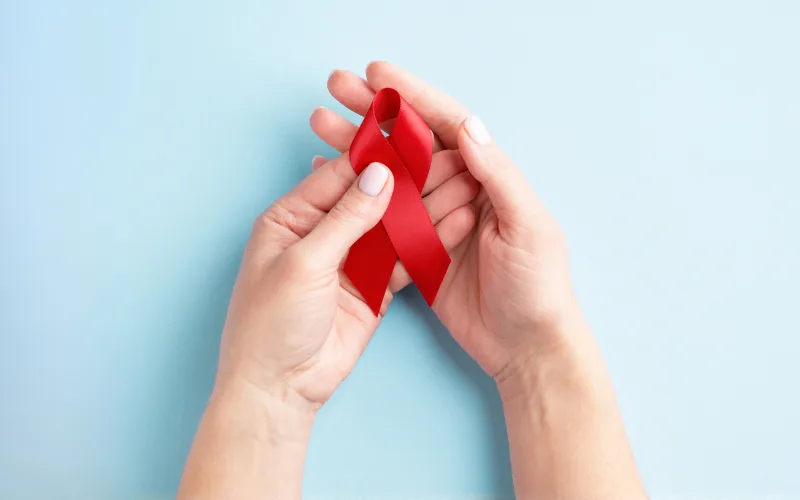
Every December 1, World AIDS Day is commemorated worldwide, dedicated to raising awareness about the global AIDS epidemic caused by the spread of HIV. The date was chosen because the first documented case of AIDS was diagnosed on December 1, 1981. Since then, AIDS has claimed more than 40 million lives, making it one of the most destructive epidemics in recorded history.
History of the Commemoration
The concept of dedicating a day to the global fight against AIDS originated at the World Summit of Ministers of Health in 1988, within the framework of AIDS prevention programs. Since then, governments, international organizations, and civil society have joined the initiative. From 1988 to 2004, the commemoration was organized by UNAIDS, which selected a theme each year in consultation with partner organizations. In 2005, responsibility for the day was transferred to the World AIDS Campaign (WAC), an independent organization. Since 1995, the President of the United States has officially proclaimed World AIDS Day. The red ribbon is the internationally recognized symbol of support for the fight against AIDS and solidarity with those affected.
Global HIV Statistics: Where We Stand
According to UNAIDS data for 2021:
- 38.4 million [33.9M–43.8M] people were living with HIV globally.
- 1.5 million [1.1M–2.0M] people became newly infected with HIV in 2021.
- 650,000 [510,000–860,000] people died of AIDS-related illnesses in 2021.
- 28.7 million people had access to antiretroviral therapy in 2021.
- 84.2 million [64M–113M] people have been infected with HIV since the start of the epidemic.
- 40.1 million [33.6M–48.6M] people have died of AIDS-related illnesses since the start of the epidemic.
Global Investment and 2025 Targets
At the end of 2021, USD 21.4 billion (in constant 2019 US dollars) was available for the AIDS response in low- and middle-income countries — approximately 60% from domestic sources. UNAIDS estimates that USD 29 billion per year will be needed by 2025 to end AIDS as a public health threat.
Addressing inequalities is both an ethical priority and a strategic necessity: according to UNAIDS, fulfilling commitments on equality will save millions of lives and better prepare societies to respond to future pandemics.
Drug Delivery Innovation and HIV: An Active Development Frontier
The success of antiretroviral therapy (ART) transformed HIV from a terminal disease into a manageable chronic condition. However, lifelong treatment creates significant adherence challenges: daily dosing, gastrointestinal side effects, and the psychological burden of continuous therapy are factors that contribute to treatment discontinuation.
Drug delivery innovation is a direct response to these challenges. Long-acting formulations — injectable long-acting agents, implants, and transdermal systems under investigation — seek to reduce dosing frequency and improve tolerability. The development of transdermal drug delivery systems for antiretrovirals is an active area of research: the ability to release drugs in a controlled manner through the skin over extended periods represents a genuine innovation axis with potential to improve HIV treatment outcomes.
For pharmaceutical organizations working in this space, the choice of development partner — with expertise in controlled-release formulations, clinical capability, and access to regulated markets — is a strategic decision that shapes the scope and feasibility of the program.
References
- UNAIDS. Global HIV & AIDS Statistics — Fact Sheet 2022. https://www.unaids.org/en/resources/fact-sheet
- WHO. HIV/AIDS. Key Facts. https://www.who.int/news-room/fact-sheets/detail/hiv-aids
- World AIDS Campaign. History of World AIDS Day. https://worldaidscampaign.org
- Gunawardana M et al. In vitro to in vivo correlation of tenofovir release from a vaginal ring. Antimicrobial Agents and Chemotherapy. 2011.