

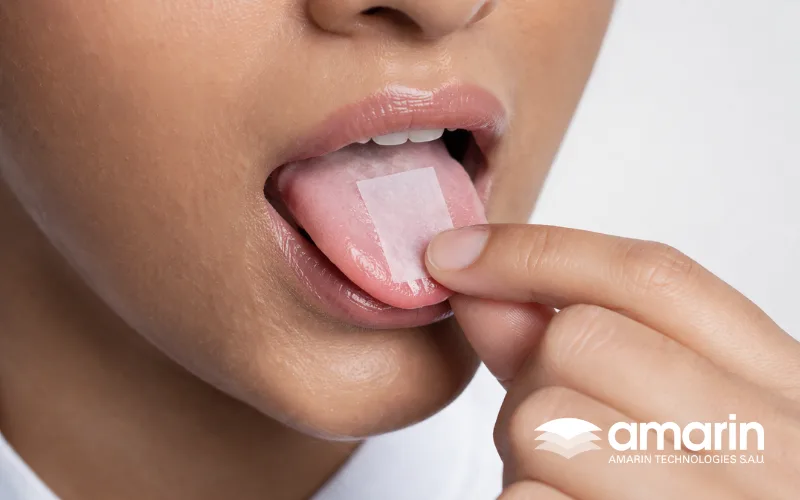
There is a conventional way to think about Oral Films: as a formulation alternative to tablets. Easier to swallow, faster to dissolve, better adherence in certain patient populations. Useful, but secondary to the molecule.
A recently announced licensing agreement in the Oral Films space challenges that framing.
The deal combines a well-characterized active ingredient with a differentiated, IP-protected delivery format. Then commercializes that combination through territory-by-territory partnerships. The active ingredient is not new. It has been used therapeutically for years. What was built around it was a delivery system — and that system was protected with IP.
The result: a licensing deal structured around the format, not the molecule.
Why this matters beyond one deal?
The global Oral Films market is projected to grow at 8.6% CAGR through 2032. That number reflects more than clinical preference. It reflects a strategic shift in how some companies are approaching portfolio development.
The logic is straightforward. If you can combine a well-characterized active ingredient with a delivery system that offers genuine clinical or compliance advantages — and protect that system through patents — you have a licensable asset that competes on differentiation, not on discovery.
This reduces development risk significantly. The pharmacological profile of the molecule is already known. The regulatory unknowns shift toward the delivery system and the data required to support the new format. That is a more bounded problem than starting with a new chemical entity.
For business development teams, the implication is direct: the question is not only what molecules are in your pipeline, but what delivery systems are available to differentiate them.
Three things this model illustrates
IP around delivery format is real and enforceable.
Patent protection is not limited to the active ingredient. Formulation patents covering how a drug is delivered, released, or stabilized can provide meaningful market exclusivity. The format itself becomes the protectable asset.
Territory-by-territory licensing is a viable go-to-market structure.
Rather than seeking a single global partner, regional agreements allow for flexibility in deal structure and partner selection. Market entry can accelerate in specific geographies without requiring a fully global commercial infrastructure from day one.
Delivery format changes the conversation with potential partners.
A partner evaluating a licensing opportunity for a well-known molecule in tablet form faces a mature, competitive market. The same molecule in a differentiated, IP-protected Oral Films format opens a different negotiation — one where the delivery system itself is part of the value proposition.
What this means if you are working with Oral Films
Not every Oral Films project will follow this model. Co-development, contract development, and out-licensing each have different risk profiles, timelines, and capital requirements. But the underlying principle applies broadly: delivery format decisions made early in a project have commercial implications that extend well beyond formulation.
Choosing a delivery system is not a technical decision made in isolation from business strategy. It is part of the same conversation.
At Amarin, we work with pharmaceutical partners at different stages of that conversation — from early feasibility and formulation development to GMP manufacturing and regulatory documentation for both transdermal and Oral Films platforms.
If you are evaluating delivery options for an existing molecule or exploring what Oral Films could mean for your pipeline, we are available to discuss the specifics.
